Do Smart Thermostats Actually Save Money? The Real Numbers
Smart thermostat marketing promises dramatic savings. The honest answer: the best-documented average is modest but real — about 8% of heating and cooling costs, roughly $50 a year for a typical home, according to ENERGY STAR's certification data. Here's where that number comes from, and which thermostats actually carry the certification.
The 8% figure, explained
To carry the ENERGY STAR label, a connected thermostat must demonstrate savings using field data — not lab simulations. EPA's program data shows the average certified model saves ~8% of heating and cooling bills (~$50/year). That's the same figure utilities cite when they offer rebates for these devices — which is the smarter first move (more below).
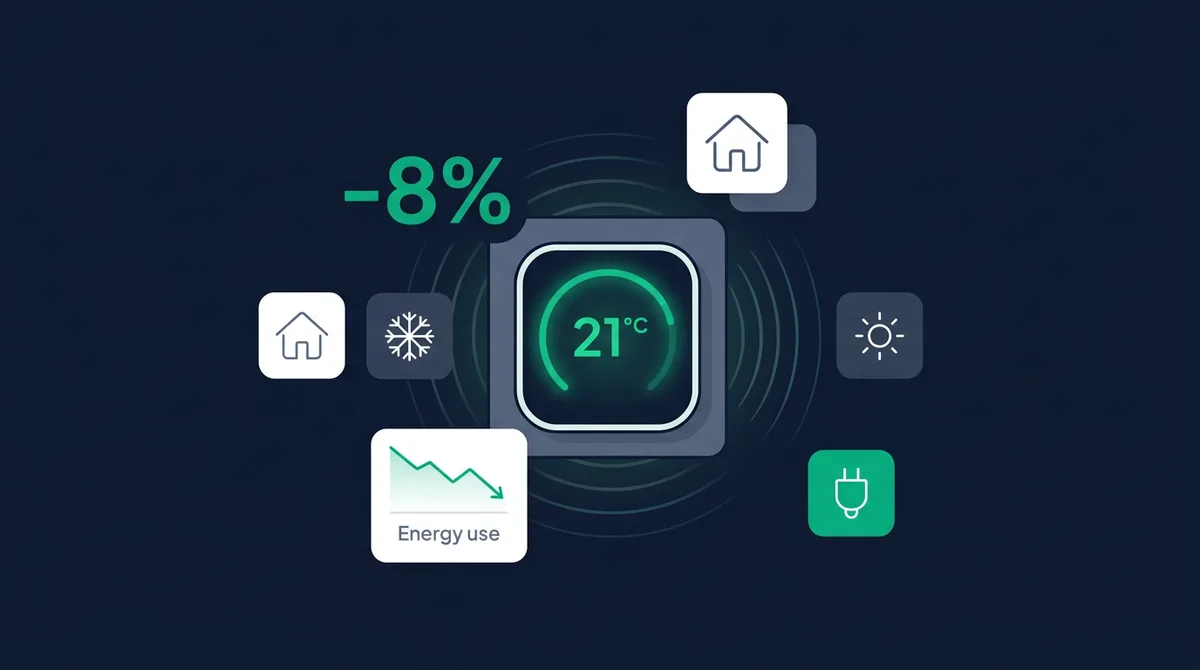
Where the savings actually come from
- Schedule discipline. The single biggest mechanism: heating/cooling less when nobody's home or asleep. Manual thermostats almost never get programmed; smart ones automate it.
- Occupancy awareness. Sensors detect when rooms are empty and adjust.
- Remote sensors. ecobee's SmartSensor and Nest's temperature sensor fix the "one room is always cold" problem without overheating the rest of the house.
- Utility programs. Many utilities (including Hydro-Québec's and most US demand-response programs) offer credits when your thermostat flexes during grid peaks.
The two picks we'd recommend
As an Amazon Associate, PowerTrip earns from qualifying purchases — details at the end of this guide.
ecobee Smart Thermostat Premium
Toronto-built and designed around Canadian winters, the ecobee Premium is the flagship: Siri and Alexa onboard, an air quality monitor, and a SmartSensor in the box that helps heat the room you're in rather than the whole floor. Its occupancy-aware scheduling is the mechanism behind the 8% figure.
- Best for: multi-room homes, heat-pump and furnace households in cold climates
- Standout: included remote sensor + built-in voice assistants
Google Nest Learning Thermostat (4th gen) + Temperature Sensor
The redesigned 2024 model is the newest generation: bigger display, Matter support, and Adaptive Eco that quietly optimizes around your routine. If you already live in Google Home (or use Alexa/HomeKit), integration is seamless.
- Best for: Google Home households, design-conscious installs
- Standout: Adaptive Eco + fresh 4th-gen hardware
Amazon prices shown at publish time; check the product page for the current price.
Before you buy: check the rebate first
The fastest payback is often free money: most North American utilities rebate ENERGY STAR thermostats $50–$125, and Hydro-Québec and Canadian provincial programs do the same. Search "[your utility] smart thermostat rebate" before paying full price. If your utility covers most of the cost, the 8% figure becomes pure profit from year one.
Connecting it to the big picture
Heating and cooling are the largest controllable loads in most homes — and they move on the same grid you can watch on our live Canada–US map. During a January cold snap, the whole Northeast reaches for electric heat at the same time. A thermostat that schedules itself smarter eases both your bill and that collective peak.
The mistakes that eat the savings
- Over-aggressive setbacks with heat pumps. Old thermostat logic (crank it down 8° when out, crank it up when back) can make a heat pump switch to its auxiliary resistance coils — the most expensive heat in your house. Modern thermostats manage this with built-in recovery ramping; don't fight it by scheduling deep drops.
- Turning off the schedule. A smart thermostat's savings live in its schedule. If you silence it after a week of manual overrides, you've bought a very expensive dial.
- Ignoring the sensor placement. A thermostat in a sunny hallway will call it warm when the bedrooms aren't. Remote room sensors are the single best feature most buyers never use.
- Skipping the C-wire check before buying. It's the #1 cause of returns. Look at your current thermostat's wiring (power off, pull the plate) before you order.
Decision table: the three ways to go
| Option | Best if | Watch out for |
|---|---|---|
| ecobee Smart Thermostat Enhanced / Premium | Multi-room control, utility demand-response programs, Apple Home / Alexa / Google all supported | Premium features (voice) you may not need |
| Google Nest (2nd/3rd gen) | Simplest experience, strong app, works with most systems | Requires more consistent Wi-Fi; less granular scheduling |
| Basic programmable thermostat ($25–60) | You just want a schedule and don't need remote control | No learning, no remote sensors, no utility programs |
The Québec/Ontario angle: Hydro-Québec's residential rate is one of the lowest in North America (under 8¢/kWh), so the percentage saved is real but the dollar figure is modest — the 8% estimate is about managing a big bill down, not a small one. In Ontario, time-of-use pricing makes the timing of the setback worth more: shaving the morning peak does double duty. Wherever you are, check your utility's smart-thermostat demand-response programs — some pay annual credits just for enrolling.
Do smart thermostats actually save money?
Yes, modestly. ENERGY STAR's own figure: certified smart thermostats save about 8% of heating and cooling costs on average — roughly $50/year for a typical home. Real savings depend on your schedule, your HVAC system and how consistent your old habits were.
How does a smart thermostat save energy?
The savings come from schedule discipline: fewer hours heating or cooling an empty house. Learning models, remote sensors and occupancy detection automate the setback that most people never program on a manual thermostat.
ecobee vs Nest: which saves more?
Both are ENERGY STAR certified and both hit the ~8% average. ecobee ships with a remote sensor (helpful for hot/cold rooms); Nest's new 4th-gen model adds Adaptive Eco. Pick by ecosystem — it matters more than the last few percent.