Draft-Proof Your Home for Winter: The Cheap Fixes That Work
Before the first real cold snap, there's a two-hour project that beats almost every gadget you could buy: finding the gaps where warm air leaks out and sealing them for pocket change. This guide covers the cheap fixes that actually work — and the two products we'd buy to do them.
Find your leaks in five minutes
On a cold or windy day, run the back of your hand slowly around window frames, exterior door edges, baseboards on exterior walls, and electrical outlets. Anywhere you feel moving air is a hole in your building envelope — and every cubic metre of warmed air that escapes has to be paid to re-heat.
Fix 1: window film — the dollar-per-window upgrade
Shrink film creates a pocket of dead air over the glass, and still air is a genuinely good insulator. It's the single best value-per-dollar move in winterizing.
As an Amazon Associate, PowerTrip earns from qualifying purchases — details at the end of this guide.
3M Indoor Window Insulator Kit (5 windows)
The original: double-stick tape + film + a hairdryer to shrink it taut. Covers five windows per kit. Bonus in Quebec-style winters: it visibly reduces interior frost and condensation, because the glass surface stays warmer.
- Best for: older double-hung windows, rentals, basements
- Effort: 15 minutes per window
- Honest limit: single-season film; remove in spring
Amazon prices shown at publish time; check the product page for the current price.
Fix 2: the under-door gap — your 24/7 leak
That finger-height gap under your exterior door leaks heated air around the clock, whether the furnace is on or not. A silicone sweep is a ten-minute, tool-free fix.
Holikme Door Draft Stopper (2-pack, silicone)
Self-adhesive silicone strips that seal the door bottom — one pack covers two doors. Also blocks dust and street noise, a nice side effect for city living.
- Best for: exterior doors, garage entries, drafty apartment doors
- Effort: 10 minutes, no tools
Fix 3 (free): the behavioural layer
- Close doors to unused rooms — a closed bedroom is a smaller volume to heat.
- Use heavy curtains at night — they add another dead-air layer over glass, and open them on sunny south-facing windows by day for free solar heat.
- Reverse ceiling fans clockwise in winter — pushes warm air back down without a draft.
- Move furniture off exterior walls and vents — blocked vents waste heat, and a sofa against an outside wall traps a cold pocket.
Why this pairs perfectly with electric heating
If you heat with electricity (like most of Québec — whose hydroelectric exports we track live on the map), every draft leaks money at your own rate. If you heat with gas, drafts still leak heat — you just pay a different utility. Either way, the envelope comes first: seal it before upgrading anything else.
Draft-proofing mistakes that waste your money
- Sealing weep holes. Those small slots at the bottom of vinyl window frames are drainage, not defects. Blocking them traps water and rots the sill.
- Caulking moving joints. Caulk is for static gaps. Anything that opens (window sash, door hinge line) needs weatherstripping, not silicone — the caulk cracks in one winter.
- Shrink film on the glass instead of the frame. The film attaches to the frame molding, not the pane. On the pane it does nothing and peels.
- Sealing a combustion appliance zone without checking airflow. If you have a gas furnace or water heater that draws air from indoors, over-tightening the envelope can cause backdrafting. If in doubt, a carbon-monoxide detector is the cheapest insurance you can buy.
The fix ladder: cheapest first
| Fix | Cost | Time | Typical impact |
|---|---|---|---|
| Door sweep / under-door seal | $5–15 | 10 min | The 24/7 leak, fixed |
| Window shrink film | $5–10 per window | 15 min | Noticeable on single/old panes |
| Weatherstripping (doors) | $8–20 | 30 min | Comfort + draft kill |
| Outlet gaskets (exterior walls) | $5 for a pack | 10 min | Small, but ten of them add up |
| Attic hatch insulation | $15–40 | 1 h | Big — heat rises |
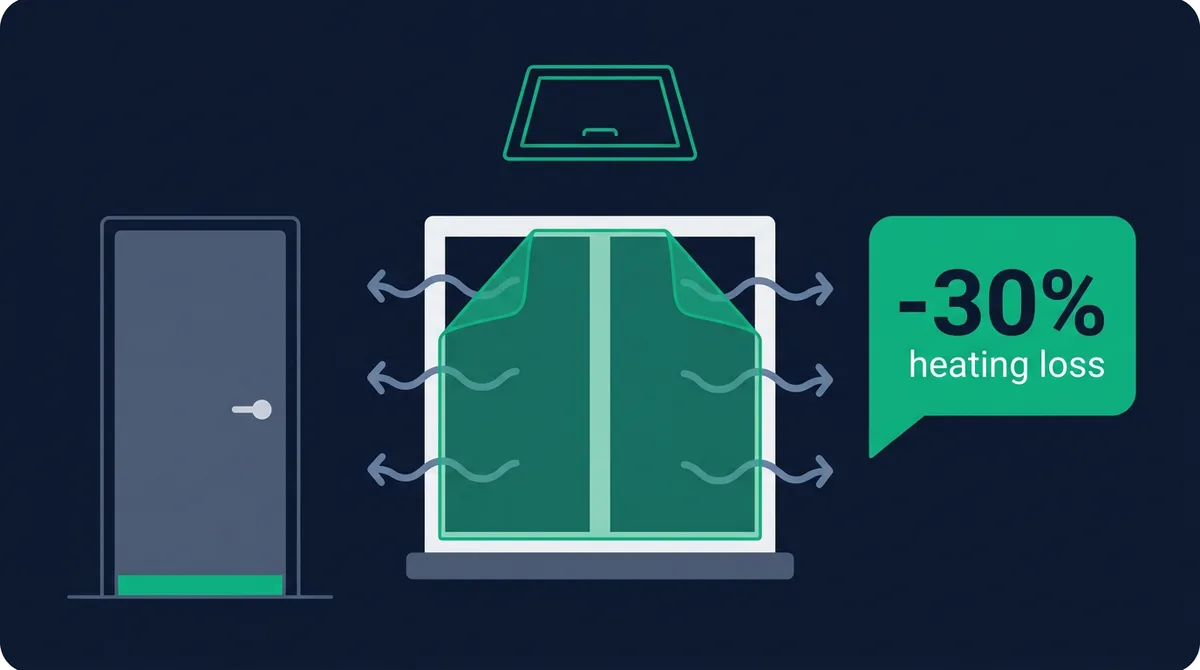
The Québec/Ontario reality: at −15°C and colder, every leak runs on a temperature difference that's 30–40°C deep — far worse than the UK or most of the US. The same $30 of film and sweeps that saves a US household a little saves a Canadian household noticeably more, because the driving force behind the leak is bigger. And in electrically heated Québec homes, every kWh you don't waste is at the best possible exchange rate: you were going to pay Hydro-Québec for it anyway.
What's the cheapest way to stop drafts?
Seal the gaps air actually uses: shrink film on problem windows (a few dollars per window), a silicone door sweep under exterior doors, and outlet gaskets on exterior walls. All three together cost less than a takeout dinner.
Does window insulation film actually work?
Yes — the mechanism is real physics, not marketing: the film traps a layer of still air against the glass, and dead air is a good insulator. It won't match a new window, but it measurably cuts convective heat loss and reduces frost and condensation.
How much can air sealing save?
ENERGY STAR estimates that air sealing plus attic insulation saves a typical homeowner about 15% on heating and cooling costs. Film and door sweeps address the cheap end of that — the leaks you can feel with the back of your hand.